
Fire Damper Testing & Inspections in Northern Ireland
Professional fire damper testing throughout Northern Ireland, delivered by our Belfast-based team.
Leading Fire Damper Testing Specialists Serving Northern Ireland
VSS Ltd provides comprehensive fire damper testing and inspection services across Northern Ireland. Our competent engineers undertake statutory fire damper inspections and annual fire damper testing as per BESA DW145 and BS9999. We can clean and inspect fire dampers during testing and undertake fire damper remedials as required, ensuring your Northern Ireland facility maintains full compliance with fire safety regulations.
Our engineers serve commercial properties, industrial facilities, hospitals, schools, and residential buildings throughout the region, providing the same high standard of service that has established our reputation across the UK.
Fire Dampers: What are they & how do they work?
Fire dampers are part of a building’s passive fire protection system. Contractors install fire dampers inside ductwork which can help prevent the spread of fires from one compartment to another. As a result, the dampers need to be fitted in fire rated walls, ceilings, floors or partitions.
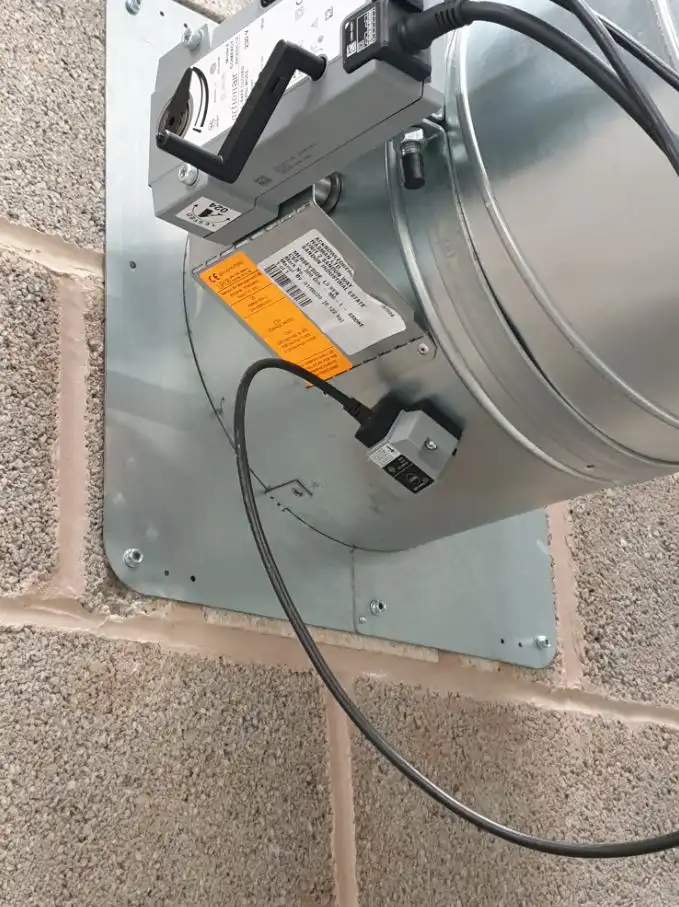
Fire dampers usually come with a fusible link (thermal element). The link activates when higher than normal temperatures melt it. This will then allow the damper to close to secure a fire barrier within the ductwork. A closed damper will help localise a fire and keep it from spreading to the rest of the building for a period of time.
There are multiple different designs and styles of fire dampers, but they all do the same thing. They keep people in your building protected, giving them more time to escape the building.
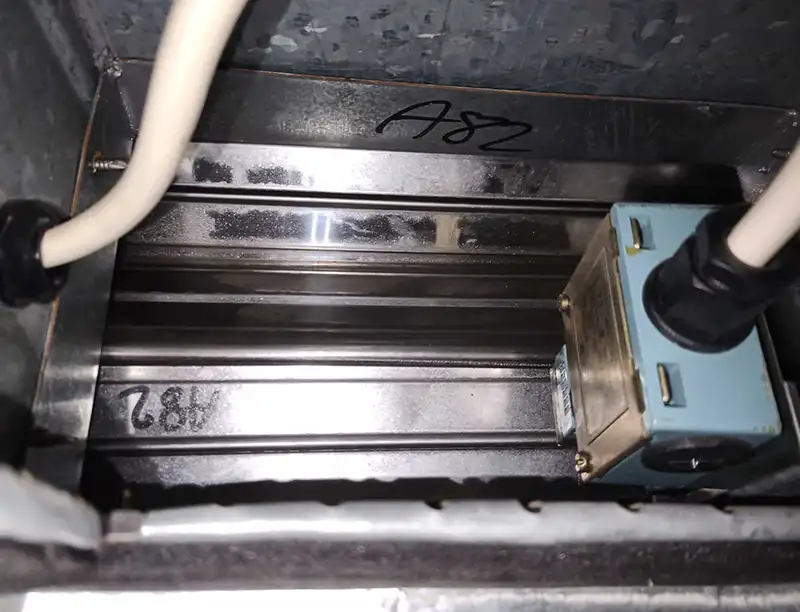
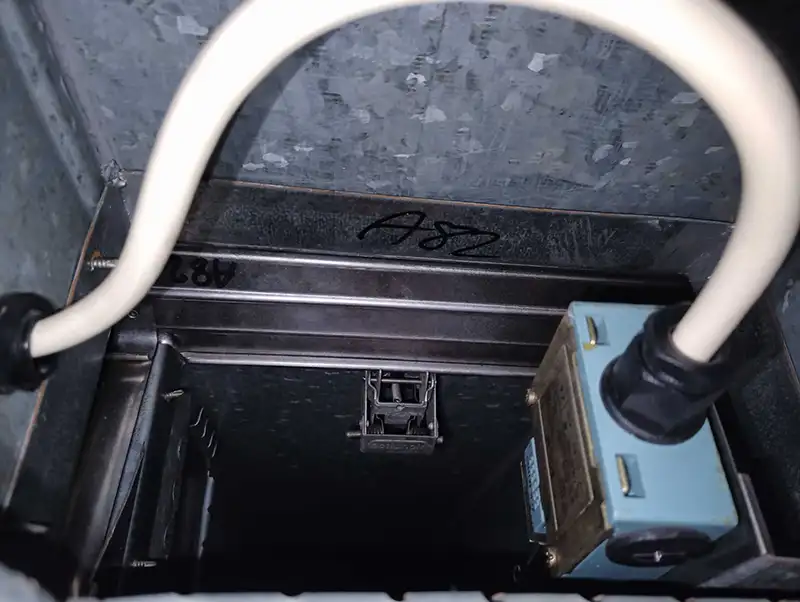
Fire dampers usually come with a fusible link (thermal element). The link activates when higher than normal temperatures melt it. This will then allow the damper to close to secure a fire barrier within the ductwork. A closed damper will help localize a fire and keep it from spreading to the rest of the building.
There are multiple different designs and styles of fire dampers, but they all do the same thing. They keep people in your building alive, giving them more time to escape the building.
Fire and smoke dampers are an integral part of a building’s fire strategy. They require annual fire damper testing, alongside regular fire damper inspections to ensure all components are operating as designed. British Standard BS9999:2017 outlines UK fire damper requirements, stipulating that all fire and smoke dampers receive a thorough fire damper testing service on an annual basis as a minimum.
Industry estimates are that approximately 250,000 new fire dampers are installed into buildings each year in the UK and these components have been commonplace in installations for over 20 years. This means that there are estimated to be in excess of 2.5 million of these components nationally that require an annual inspection and test.
The fire dampers are designed to trigger in the event of fire via fusible links that break apart when the designated ambient temperature of the area is reached. Many of these components are now automated fire and smoke dampers and are closed via an electronic actuator when the fire alarm is triggered.
Fire Damper Testing Requirements & Challenges
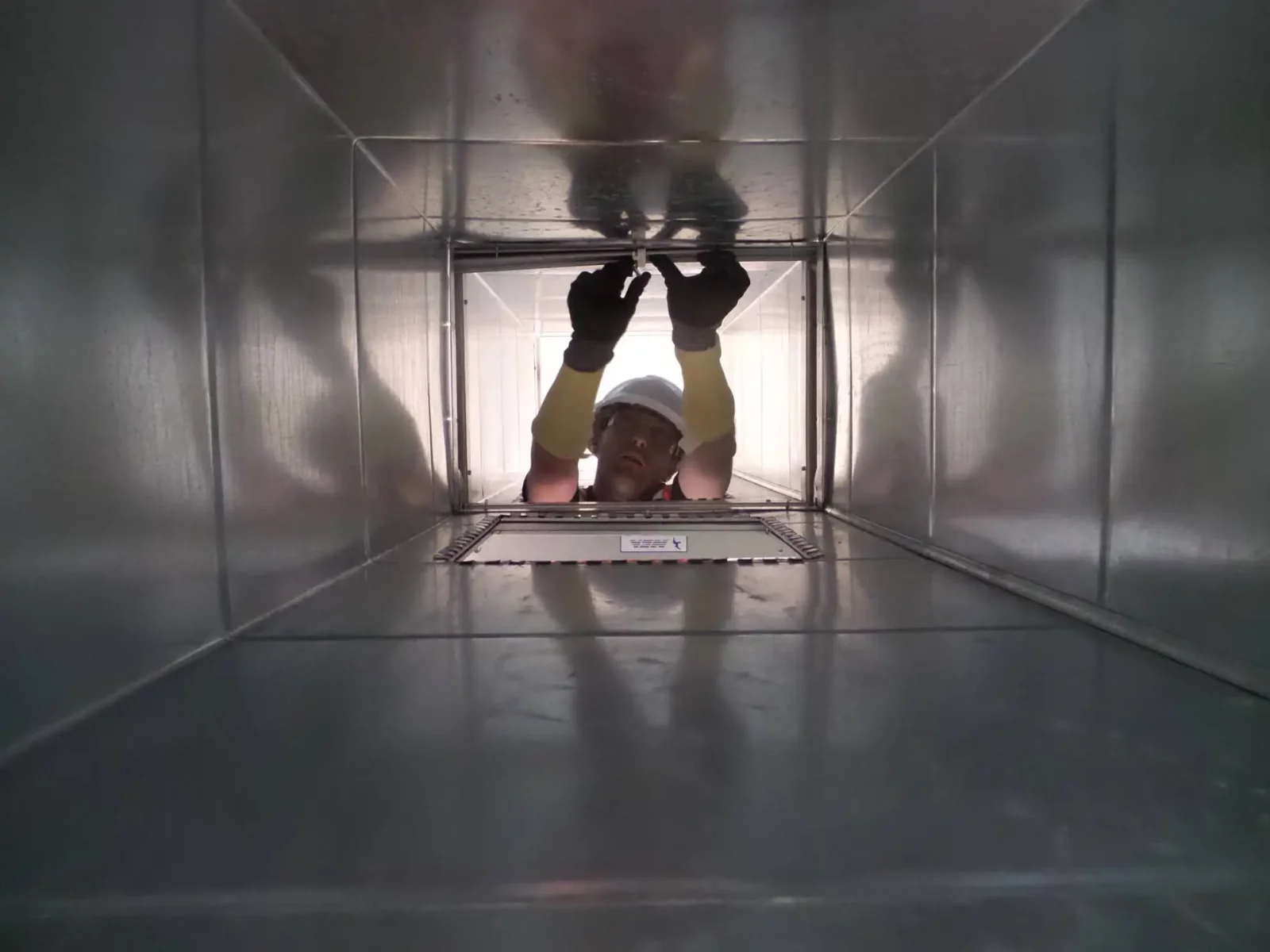
Our Northern Ireland engineers face many complex challenges when carrying out fire damper inspections and maintenance to meet fire damper requirements. The correct operation of the damper needs to be witnessed and the internal surfaces of the components should be cleaned. The cleaning is an important activity as it keeps the device as clean as possible, so that correct function and closure is possible.
The need for internal access for the cleaning and inspection requires a good free area around the damper. This will allow the testing person access. Ideally a minimum free area of approximately 600mm x 600mm directly below the damper would be kept free of all other obstructions and services to allow a technician the space to safely access the component. In many locations the dampers are obstructed by the building fabric or they are surrounded or located above other services in ceiling voids.
An access door should be fitted on either side of every fire damper. This is specified in BESA DW144 and TR19 as a requirement. Access to either side of the fire damper will aid the cleaning, inspection and any future remedial works to the device. On many first-year inspections additional access doors may be required. Our engineers are able to supply and fit access doors if required at your Northern Ireland property.
Although all fire dampers should be tested at the point of the building being commissioned and handed over, it is often the case that when the ongoing maintenance and inspections are undertaken that there are many defects identified to the dampers. We observe multiple issues during inspections with damaged or missing fire stopping to the dampers, inaccessible dampers, incorrectly fixed or supported dampers, and in a surprising number of cases dampers fitted out of alignment with the designated fire compartment wall.
The rectification of identified issues with dampers in existing buildings produces many challenges and complexities. Many of these could be avoided through the correct installation and controls at the construction and design stage.
Our Fire Damper Testing Process
As part of our fire damper testing service, we provide a full and thorough report of all fire dampers located on site. These locations will be marked upon building ventilation drawings which provides a visual reference of all fire dampers located on site.
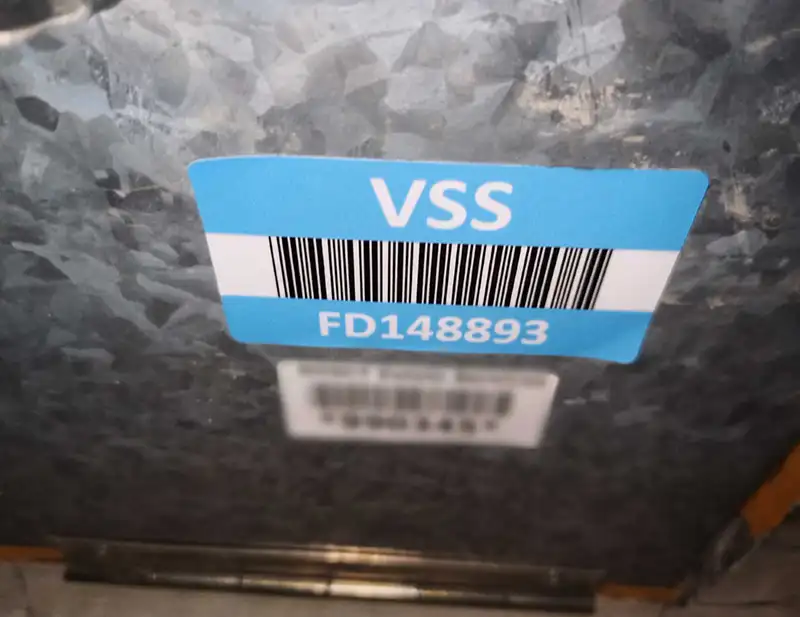
Every fire damper will be given a unique asset number and the details relating to the fire damper will be recorded. The information each engineer will collate is:
- Location within your Northern Ireland facility
- Size and type of damper
- Manufacturer details
- Confirmation of its correct function
- Confirmation that the damper has been installed correctly
- Confirmation that its installation is still in good order
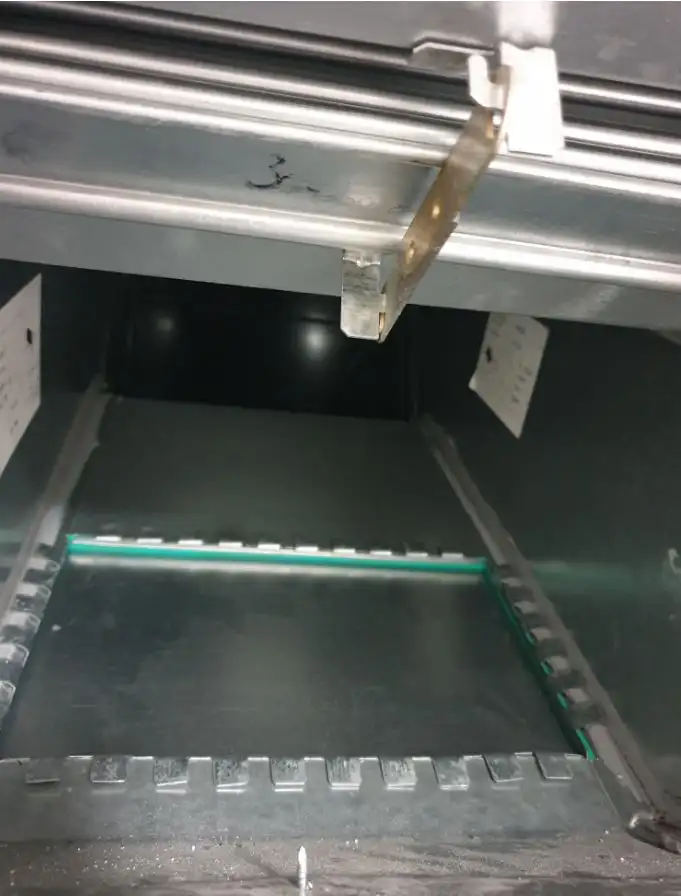
Digital images will also support this, with photographs taken of every fire damper in an open and closed position and included in the report. The fire damper should be dropped, cleaned, and then reset to the correct condition. We will photograph access restrictions or any remedial requirements relating to specific dampers.
All VSS engineers have received industry training in fire damper testing and possess thorough knowledge of the requirements for different damper manufacturers and the correct installation requirements of the devices. Some automated dampers may require the fire alarm/controls companies to attend at the same time as the testing to verify that the centralised control panels are operating with the dampers correctly.
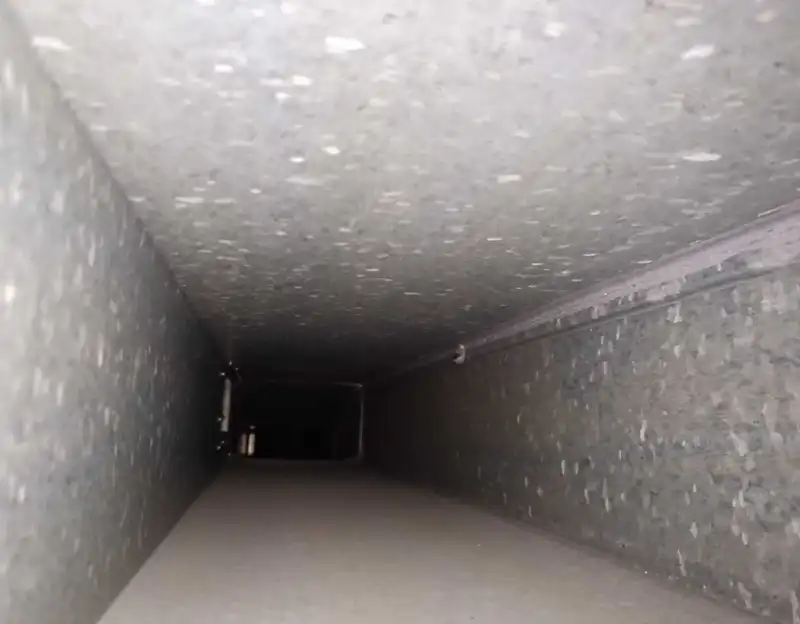
Due to the nature of the dampers disturbing the air path, they are often found to collect dust and debris at a faster rate than the ventilation distribution ductwork. Many fire dampers, particularly in extraction systems that have no filtration, become heavily contaminated very quickly. It can be the case that in certain systems, fire damper testing is required more frequently than once per annum. This is where conditions can cause fire dampers to require more maintenance, such as cleaning and inspections.
Fire Damper Testing Coverage Across Northern Ireland
Our Belfast-based team provides fire damper testing and inspection services throughout Northern Ireland. We work with commercial properties, industrial facilities, healthcare settings, educational institutions, and residential buildings across the region.
- Belfast and Greater Belfast Area
- Derry / Londonderry
- Lisburn
- Newry
- Armagh
- Bangor & North Down
- Enniskillen & Fermanagh
- All Northern Ireland Locations
Our engineers typically schedule testing with minimal disruption to your facility operations, working flexibly to accommodate your requirements. Contact our Belfast team who will be happy to discuss your requirements and arrange a site visit.
Saunders House
Springbank Industrial Estate
Springbank Road
Belfast
BT17 0QL
Frequently Asked Questions About Fire Damper Testing
How often should fire dampers be tested in Northern Ireland?
Fire dampers in Northern Ireland should be tested annually in accordance with BS9999:2017 and BESA DW145 guidelines. Our Belfast-based engineers provide comprehensive annual testing with detailed reporting to ensure your facility remains compliant with all fire safety regulations.
What does fire damper testing involve?
Fire damper testing includes visual inspection of the damper and surrounding area, assessment of accessibility, checking fusible link condition, operational testing of the damper mechanism, verifying blade operation and seal integrity, and providing detailed documentation with digital photographs and location mapping.
Do you provide fire damper testing throughout Northern Ireland?
Yes, our Belfast office services all of Northern Ireland. We work with facilities across the region, from small commercial properties to large industrial complexes, healthcare facilities, and educational institutions.
What regulations apply to fire damper testing in Northern Ireland?
Northern Ireland follows UK standards including BS9999:2017, BESA DW145, BESA DW144, and TR19 for fire damper maintenance and testing. These regulations require annual testing as a minimum, with more frequent testing recommended in certain environments where dampers may become contaminated quickly.
What happens if a fire damper fails testing?
If a fire damper fails testing, we provide detailed documentation of the issue along with recommendations for remedial work. Our engineers can undertake many repairs on-site, or we can coordinate more extensive remedial works if required. We’ll work with you to ensure your facility achieves full compliance.